Monday, December 2, 2024

Final Blog Post

Social media is a large part of today’s world. Especially in my own generation. Almost everyone I know posts on social media and lots of people are unaware of how much information they are actually putting out there. There are many issues that come up with the lack of social media privacy. Companies collect personal information constantly. There are also links to social media with fraud and scams. The FTC reported one in four people who lost money due to fraud claimed contact with the attacker began on social media. In 2021, the FTC reported scams from social media added up to $2.7 billion. 

My personal digital footprint is something that is on my mind a lot. I wouldn’t say I have a large online footprint but I do have multiple social media accounts. I do not have a personal website but I do have Instagram, Snapchat, Facebook, TikTok, and Linkedin. None of these sites are linked to anything of mine to my knowledge. Mostly what I put on them are just pictures of things I am doing. The only more private information that is accessible from my social media would be my full name, not including middle, where I am from, but not my direct address, and the college I go to. Also, Linkedin has my email address but it is more of a professional site that I use for internship and job opportunities. I believe personally I do a good job at keeping my information private and do a good job at controlling my digital footprint. 

The idea of a digital footprint in today’s digital age is a concern, especially in today’s youth. In the article “I’m 14, and I Quit Social Media”, a young girl explains her concerns that came from joining social media and how they led her to quit. One concern that she brought up was how she found out her mom and sister had been posting pictures of her without her knowledge. This is similar to the issue that has been under the public eye recently of ‘family vloggers’. These parents post videos on youtube of their children starting as early as babies, and post their entire lives without the kids agreeing or knowing sometimes. This situation and the one brought up in the article brings up a concern that you might not have control of what is posted of you. As much as you control your digital footprint on your own, people can post things about you that affect your footprint. 

Online privacy is another issue in social media and the digital age. In the article ‘Our Collective Privacy Problem Is Not Your Fault’, the author talks about companies and how they keep your data. Places can track where you go, what you buy, and what you do. This is concerning because people seem to be losing their sense of privacy because of the internet and social media. The article also talks about how it’s not an individual’s fault their privacy is being invaded. These companies should not have access to this data, and it is a wider issue then just individuals not being careful. 

Social media itself has a debate on if it is beneficial or harmful. Social media can have benefits of entertainment, making connections, finding information, marketing, and more. However, the negatives of social media could possibly outweigh the good. As I have mentioned, privacy is a concern, but along with that social media could have bad effects on mental health. Social media addictions can make people more lonely. People talk to people online and see them as ‘friends’, but they are strangers. This is a privacy concern, and disconnects people from reality. As a young adult, social media has been a part of my life for years. I can’t deny the negatives of social media, but when used correctly and in moderation, social media can continue to be the positive thing it was created to be. 
Saturday, November 30, 2024

EOTO 2 Reaction

There were many concepts that effect different groups of people including myself. Learning about these concepts from the different groups was interesting and there were a few that caught my eye. 

The first concept that interested me was net neutrality. This is an interesting topic because it presents the idea that any and all information on the internet should be equally accessible to everyone. This could cause a few issue like restricting industries by requiring equality across web traffic. However, it could be beneficial because websites could not intentionally slow down internet speed to restrict services or applications.

The next concept that interested me was Tik Tok bans. Tik Tok is an app that I use on a daily basis and it would affect me and many others if it were to be banned. Talk of a Tik Tok ban has been around for a while and it is interesting to look into the effects it would have. The reason the government wants these bands is because of privacy issues or threats to national security. The effects of this however are plentiful. First people would lose jobs. Multiple people would lose jobs; people make a living from Tik Tok. Also it would shift company advertising because Tik Tok is a hub for companies' PR. For the younger generations it would change their entertainment and social connections. There would also be effects on activism. Tik Tok has become a key platform for political and social activism which would go away if the app was banned. There would also be loss of trust between the public and the government. 

Overall, the internet, privacy, and the government's involvement in both of these are interesting concepts to think about. All the groups did a great job informing each other about each concept. 


Friday, October 18, 2024

Anti-War Voices

War has been a constant theme in United States history since the revolutionary war gaining independence for the United States. After the United States joined World War 1, anti-war voices started to come out against the war. Resulting from this, congress passed the Espionage Act. This act basically made it illegal to speak out against the war. Thousands of people were arrested for speaking against the war, and received no sympathy from those who were in support of the war. This started a silencing of anti-war voices that still goes on today. 

The website antiwar.com features plenty of articles speaking against the war currently going on in Israel, and the United States contribution to it. There are plenty of people against this war currently going on, but there is little coverage on people who are against it. To look into this on my own, I searched on google “people against the war in Israel”, and what came up was either posts from antiwar.com, or smaller news sites talking about these voices. None of the major news sites seem to be speaking about the anti war voices. When looking at news from the war on the bigger sites there are only updates on the war or about the protests on college campuses.

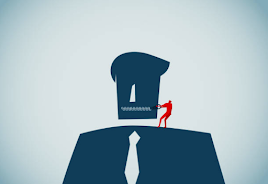
This extends the question: why aren’t we seeing anti-war voices being represented? My first thought comes from going back to the espionage act in the 1900s. Although acts like this would not pass now, major news sources are fearful of speaking out against the government. This could also be seen as a type of agenda setting. Anti-war voices are not the majority opinion, and news sources want to put out the popular opinion on issues. Secondly, this issue is not split between democrats and republicans, there is only a smaller portion of the general public that is against the war. This makes it hard for even right leaning or left leaning news sources to cover the issue. The smaller obscure websites represent the specific group of people that are against it. 


Tuesday, October 1, 2024

EOTO #2: Agenda Setting and Gatekeeping

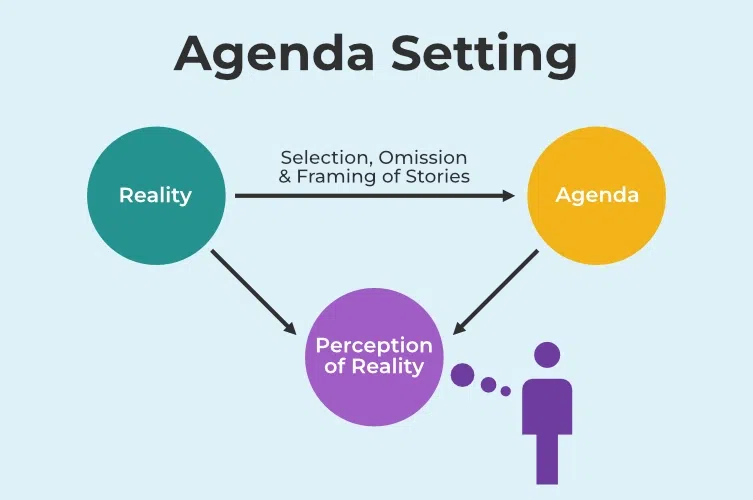
Gatekeeping and Agenda Setting are two theories that examine how information access is controlled and how it effects the public. A simple definition of gatekeeping is; the action or process of controlling access to something or monitoring and selecting information. A simple definition of agenda setting is; how the influence of the media affects the presentation of the reports and issues made in the news that affects the public mind. Putting news out in a specific order according to how people think and how much influence it will have. These theories are similar, agenda setting is a more developed version of gatekeeping, but they both center around the access of media to the public. 

Agenda setting is not always a bad thing. Agenda setting helps to put the more important information in the forefront of things. This happens through media channels deciding what events to broadcast based on what they think will be the most received by the public. Although this does put information at the forefront, each news channel has its own sets of ethics. When an editor is deciding what to publish, items can be rejected because they don’t hold the standards of the organization. This begins to represent the bad side of agenda setting and gatekeeping. Americans are not all going to agree on what issues are important, so, how can we trust that the media is actually putting the most important issues out? 

Gatekeeping sets a standard to information value. Gatekeepers hold influence on policies and procedures by playing into an audience’s confirmation bias. This is also an issue with the general public. Society contributes to gatekeeping through consumption. Confirmation bias is similar to gatekeeping in the sense that people are gatekeeping information from themselves. 

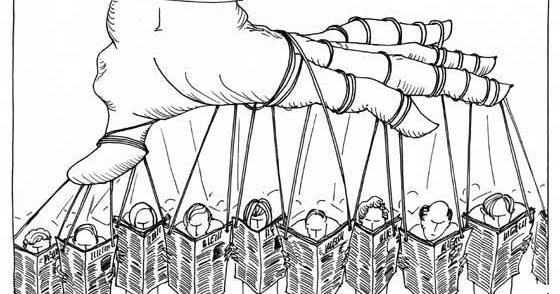
Gatekeeping and agenda setting have a negative effect on society as a whole. The two theories replicate power structures that are already in place and make them more imbalanced. This comes from the power the media already has, because when the media is able to gatekeep information that they know about it makes them even more powerful. It also stifles creativity and innovation because new perspectives are being stopped. Through agenda setting, the media is looking for relevant information. If something is new, the media might not see it as relevant and not put it out, therefore new ideas are not presented to the public. 

Minority groups are also affected greatly by agenda setting and gatekeeping. Congressional responsiveness to issues has been at the forefront of this. As the public identifies a bunch of different issues as important, policy makers have a harder time addressing things. This also affects marginalized groups who might have a different important opinion on things. Media groups that are gatekeepers might not accept an agenda that minority groups are trying to get represented. This causes an issue when there is something that would be important for minority groups to know about but no one is talking about it. 

Personally, I, my family, and my generation are all affected by agenda setting and gatekeeping. There is information that could be being withheld from me by the media that I should know. For example, as a woman, sometimes my female voice is seen as a minority voice and therefore not represented. This is a real issue. My generation is also majorly affected by these issues. As the new and future voters, my generation should have access to all issues that may affect us. If the media holds back valuable information, we might be making uneducated votes. 


Tuesday, September 24, 2024

Rogers Diffusion of Innovation: The Telephone

The invention of the telephone was an innovation that changed many things for the world. One interesting thing about this invention was how quickly it became popularized. Using Rogers Diffusion of Innovation, we are able to see the steps the telephone took to become a staple in the United States, to where the telephone is now.


The early pioneers of the telephone were Antonio Meucci and Graham Bell. Meucci was the first technical inventor of the telephone, but Bell is highly accredited for it. Elisha Gray was another inventor involved, he was seen as Bell’s competitor but never reached as high of achievements as Bell did. The telephone was created to improve the workings of the telegraph. These pioneers all worked to achieve this goal.


The early adapters saw something in this invention and believed it could go somewhere. The telephone was quite expensive at first. In the beginning, it was used by wealthy individuals and large corporations. It was used to communicate through direct lines between specific locations. The first ever telephone line was created in 1878.  At this point, it wasn't possible to make long-distance calls or international calls. Additionally, it was an expensive invention so it wasn’t extremely popular yet. 


The early majority came about after the transcontinental telephone line. The transcontinental telephone line was created in 1915 which accelerated the popularity of the telephone. Within a short amount of years of this invention, people were using the telephone all over the United States. However, it still remained an expensive invention, just now more accessible. 


The late majority came from World War I times. During World War I the government nationalized telephone and telegraph lines in the US. Then, Congress and President Wilson issued an order putting them under the direction of the US post office. By this point, the telephone had become even more popular. This happened around 1919. The 1920s were accredited for the time the telephone became extremely popular. 


The laggards were people who were unable to afford the telephone or didn’t see a need for it. Throughout the whole 20th century there continued to be growth in the popularity of the telephone as more people caught onto the idea. At this point, the telephone was a staple in the United States and it was just slowly grabbing the attention of the minority of people who didn’t own one. 

There is a long-tail of people who haven’t, and never will own a telephone. The invention of the cell phone took over the telephone. Once the cell phone became more affordable people began switching over. In 2022 the United States Center for Disease Control and Prevention recorded that only 29% of homes still have a landline. Compared to 90% in 2004. For people who have grown up in the world of cell phones, it is likely that they never have, and never will own a telephone. 


There were not many downsides to the telephone other than the fact it was pricey. The telephone revolutionized communication which led to people wanting to join in on purchasing the invention. The positive effects of the telephone outweighed the negative which made the telephone as popular as it was. The reason for the downfall of the telephone stemmed from new and more efficient technologies, but the telephone will continue to be recognized as one of the greatest communications advancements ever made. 


Sunday, September 22, 2024

EOTO #1 Reactions

The communication technology EOTO's presented many different types of technology over the years that have greatly affected our world as we know it today. There are so many different types of communication and I have chosen to reflect on some that have caught my interest the most.


The Radio, invented in 1899 was a big communication change. The radio allowed for news to travel faster, introduced a new way to listen to music and popularized political information.  One important thing the radio helped with was World War II updates. The radio allowed for citizens to stay up to date on what was happening with the war. Also, the first presidential debate by radio occurred in 1948. This allowed for people to listen in as we do today on our TV's. 

The personal computer was another important change. While the general computer had existed already, the personal computer opened up a whole new set of doors in technology. The personal computer was originally a learning tool so people could learn how to use computers. It also opened a gateway for laptops which are now a daily part of our lives. 


Carrier pigeons were a unique communication 'technology' to learn about. The carrier pigeons were invented in the 5th century BCE. This was a generational way of communication used for war, commerce, and navigation. Before them, information would have to be passed through word of mouth, or walking long distances. The carrier pigeons were the quickest long-distance communication at the time which was extremely valuable in times of war. 


Instagram is a communication technology that is important in my life. I use Instagram on a daily basis and it was interesting to learn about the development and effects of Instagram. After the app was launched it quickly had a lot of users. Originally Instagram was just for sharing photos and videos but has now grown into a huge platform. Instagram popularized 'influencers'. Also, direct messaging through Instagram has allowed people to connect throughout the world. 


The last technology I have chosen to reflect on is the camera. The first camera ever made was all the way back in 400 BCE, the Camera Obscura. Over time, the camera has evolved. There was a lot of advancement made in the 19th century. The camera allows for the preservation of history which is important for learning and reflecting on the past. The camera has also allowed for images to be shared across the world. 

Age of AI

AI has had an increasing effect on society as we know it. AI has impacted work, school, transportation, and even daily life. The Age of AI documentary showed the effects that AI has had both negative and positive. 

The documentary opened with a game, Alpha Go, which was a deep learning intelligence that taught itself to play video games better than humans could. This Chinese game was coming up with new moves that the human mind couldn't fathom. Alpha Go opened people's eyes to the possible success and impact that AI could have on society. 

After Alpha Go, China began a plan to chase the AI future. Their plan includes catching up to the United States by 2025 and ruling the world in 2030. China leads the world and e-commerce. They have technology that has drones delivering packages, and currency revolving around facial recognition technology. There is also a lot of talk about self-driving vehicles in China. Although the United States is currently ahead in this, China thinks they will popularize it. Lastly, almost everything in China is on phones which gives them a lot of data. This will be helpful to them to start up AI. 

The documentary includes "promises" of AI. The first is the replacement of human drivers. Commercial goods were being driven on Interstate 10 and there is a driver in the car but the car is driving itself. The idea of self-driving vehicles could try and solve traffic fatalities. However, we have seen the issues that cars like Tesla's have caused with faulty technology so there is still a lot to learn and perfect before the world relies on self-driving vehicles. Another promise involved cancer treatment. Scientists are trying to figure out why cancer is not able to be caught earlier on. Deep learning teaches computers how to understand data which could possibly be used to predict early cancer. 

The biggest thing that caught my eye in the documentary was the future of work. AI has the ability to disturb the labor force. There are multiple uses of AI that could lead to the displacement of human jobs. It is also likely that white-collar jobs could be gone faster than blue-collar jobs. This is because white-collar jobs are easier to take because they are quantitative and could be replaced by a software whereas blue-collar jobs require hand-eye coordination.

Overall, AI is promising to the improvement of some things in our society while also threatening some parts. The future of AI is unknown and we do not yet know the full effect it will have. 

Thursday, September 12, 2024

EOTO #1, Invention of the Telephone

The telephone was a major communications advancement. It revolutionized the way we communicate with each other and created more efficient communication. The telephone changed our ideas of privacy, business communication, literacy, education, and overall society. 

History of the Telephone
The telephone was first invented in 1849 by Antonio Meucci, however, it is highly accredited to Graham Bell who won the US patent for the invention in 1876. In 1878 the first telephone line was created and within 3 years there were 49,000 telephones in use. This was just the beginning of the widespread use of the telephone. In 1915, the transcontinental telephone line began operating, and the telephone became a staple in the US within 50 years. This was just the start of the spread of this massive communication advancement. 


Privacy After the Telephone
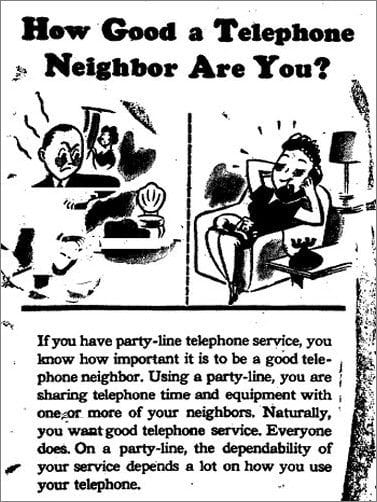
The telephone changed a lot of things in the United States. One thing that changed was privacy. At first, public phones were very popular. This allowed for other people to be able to hear private conversations. Another type of phone that was popular was the party line. This was a telephone line that connected multiple houses. This could become an issue for privacy because any one of your neighbors would be able to pick up the phone and hear your call. This created a concept of being a good ‘phone neighbor’. A good phone neighbor would make their calls short, not hog the line, and if the line was already in use, put the phone down and wait a few minutes to try again for your call. The invention of the telephone also popularized telemarketers and spam. This was also considered an invasion of privacy. Although there were negative effects on privacy because of the telephone, it also helped protect privacy in some ways. The telephone permitted people to share information without writing it down. This helped for talking to doctors, or lawyers about private things. The telephone also replaced unexpected visits from relatives or the appearance of door-to-door salesmen, because they would call instead. With all different kinds of advancements to the telephone, there still remain concerns and protections involving privacy. 

Effect on Business Communication
Business communication was another change that resulted from the invention of the telephone. The telephone made it easier and more efficient for businesses to communicate internally and externally. Sending messages became much more efficient. This would help with things like advertisement, or the sharing of general information. The telephone also expanded on the area a business could reach. This helped businesses or a national scale to get their product or service out there. Lastly, the telephone would help to build a stronger network of customers. This came from the ability to reach different areas with their message. 


Changes in Literacy and Education
Another change that the telephone created was changes in literacy and education. Before the telephone, communication was spread from writing. Letters were a popular way to get one's message out. Writing strengthened intrapersonal skills but the telephone worked to move society back towards focusing on oral communication rather than written communication. The telephone created a stronger communal feel to society. Verbal communication stresses the importance of listening, group learning, cooperation, and a sense of social responsibility. Educationally, the way students learned after the telephone was invented changed. Although there was still a reliance on written language in textbooks to learn, the telephone and advances in the telephone led to new access to information.

Effects on Society
There were also overall societal changes that resulted from the invention of the telephone. There was new efficiency in sharing ideas, beliefs, and events. Working with others became easier. This helped with things like new ideas and inventions. Also, the thought process of individuals became more self-reflective. In written language, you could take your time to make sure you were saying the right thing. With the invention of the telephone, people were more careful about what they said, and it became a bigger thing to think before you speak. 

The overall effect of the telephone struck the United States on a national level. The telephone still continues to affect the way we do things and communicate. As technological advancements happen, we are able to change the way communication works. 


Sunday, September 8, 2024

Privacy in the Digital Age

    The Ted talks about privacy revealed shocking information about what the government and different people can have access to based on the calls you make, the things you post, the places you drive to, and the messages you send. In today's world, communication relies heavily on technology, but privacy is being invaded through these technologies. 

The issues of the invasion of privacy through technology affect everyone. As a young adult who uses social media, the idea of a digital footprint is very prominent to my life. In the Ted Talk spoken by Juan Enriquez, he uses the metaphor of a digital tattoo. There is so much information that can be found out about a person through the internet even without speaking to that person. What we post everyday can never fully be taken away, and that information can be tracked. The ted talk by Catherine Crump reveals how license plates are tracked constantly. The story about a man who found out the police had information about everywhere he went, even a picture of him and his daughters getting out of his car in their own driveway, was especially shocking. This is an issue that is close to everyone. My friends, family, and I all drive places. Although none of us have legally done anything that would need to be tracked by the government or police, they have information about anywhere we have driven. This is concerning to think about because private information is not private anymore. The Ted talk by Christopher Soghoian talked about wiretapping and how the government has access to phone conversations. Everyone uses messages, calls, and other types of electronic communication to talk to friends, family, doctors, and more. Not only is the government able to access these conversations, but so is any intelligence agency that hacks into the wiretapping. To me, this is concerning because why are my conversations, as a nineteen year old, able to be so easily accessed? 


The government should not have access to this information. The government should enforce laws that make local police stations delete the data of innocent people and their whereabouts. There should also be laws protecting cyber harassment through the sharing of private images. Encryption features in telephone companies should be enforced to protect private conversations between people, and to protect people from other governments being able to access this information.


There are many things that people can do to protect themselves. Some companies have encryption software in place that makes it extremely difficult for the government to access electronic information. People should research which communication companies have these softwares and use them. Another thing people can do is to be extremely aware of their digital footprint. Think before you post something and understand that nothing truly goes away forever on the internet. 


Wednesday, September 4, 2024

The Eight Values of Free Expression

The eight values of free expression are vital to the United States. They allow people to express their First Amendment right of free speech. Each of these values comes together to make Americans have their freedom, and each value is important in its own right. 

Although each value is important I do find that the one I see as most valuable to be the value of checking on government power. Within the government, there is a system of checks and balances, but the right of the people to check the government is what makes the United States a government of the people and for the people. As highlighted in the explanation of this value, freedom of the press comes to importance with this value. The press helps the general public learn about the abuse of power in the government, and then the people can do something about the abuse of power if they see fit. This helps the general public to be a part of the government, and keep things fair within society. 

The value that I feel most personally connected to is Individual Self-Fulfillment, or self-actualization. The ability that I have as an American to express myself and create my own identity is important to me. As a college-age American, I am learning about myself and what I want my future to be. I place a lot of value in having the freedom to make my own path and identity for myself through free speech. 

I see the value of participation in Self-Government today. With it being election season, debates are important for everyone to be updated on and be able to listen to. Debates are essential for voters to be informed on candidates' policies and therefore vote based on the knowledge they gain. Another value I see today is the Marketplace of Ideas. This is another essential value of freedom. This value I also see relating to the current election season. In politics, there is an unfortunate frequency of lies being spread. This value allows for the truth and the lies to fight themselves because the truth will win. This value also highlights the importance of freedom of the press. Milton who suggested this idea was against having a license to print or publish. This way, the press is able to talk about any issues occurring at the moment, and the truth is able to come out. 

Promoting tolerance, innovation, and dissent are 3 other values that hold a lot of importance in our society today. Tolerance is a concept that can be hard to grapple with. Hate speech is something that is heavily disagreed on, no one can agree on what exactly qualifies as hate speech, However, because hate speech is protected, it allows society to promote tolerance. Society is what punishes people for saying things that hurt other people. In this way, we are able to create a society of tolerance. Innovation is important to the progress of the United States. The ability of citizens to be creative and come up with new ideas and
then share them creates a society that promotes innovation. Lastly, dissent holds a value of importance. Similar to tolerance, people are allowed to say what they want and believe what they want to believe. This allows for criticism of the government. This is important because without criticism of the government, they would be allowed to do whatever they want. 

All of the values of free expression come together to make America the free society it is. These values exist in our everyday life even when we don't realize it. 


Monday, September 2, 2024

History and Workings of the U.S. Supreme Court


 The Supreme Court video gave insight into how the Supreme Court works, and what goes on inside the court. This video taught me a lot about the Supreme Court that I didn’t know. The justices read around 100 case proposals a week, and only take around 100 a year. Once the case gets accepted and goes to the Supreme Court, lawyers have 30 minutes to make arguments before the court. While they make these arguments, the justices are asking clarifying questions about the case to make sure all justices are on the same page. The justices frequently use the lawyer as a bridge to talk to the other judges to make sure they are all on the same page. The questions are asked to bring out information that was not presented in the briefs. Once both 30-minute arguments are made the justices have a private conference where they try to come to a decision. This discussion is completely private with no clerks or secretaries present. They find a majority decision. Once justice from the majority side is chosen to write an opinion explaining the legal reasons for the decision. Law clerks help to assist with this decision and it is an extensive process. Separate decisions are often written from the minority side. There are many revisions and different drafts of the opinion. Oftentimes the majority decision becomes the minority after several drafts. The process involves lots of compromises. After the decision is made, it is released to the press and they can have it printed in hours. 

The most important take-away from the video was the extensive process of how the court works, and what goes into forming the people who are in the court. The process of putting justices in the court includes being chosen by the president, then the senate confirming. This is what gives the public some sort of say in the court. The actual process of trying court cases takes months. Then after the trial, the judges have extensive discussions.  

The most surprising thing I learned is the amount of cases they get and have to choose between. Only taking 100 cases a year is hardly anything compared to the amount they receive, 100 a month. 

This video changed the way I thought about the Supreme Court, because it put into perspective all the decision making the process is. I did not realize how much work and time goes into making the decisions. There is also a lot of thought put into who can become a supreme court justice


Top Five Sources of News and Information

There are several social media sites that I am able to receive news from. Social media is my main intake of news. Through reposting, algorithms, and “viral videos”, I am able to see news that is relevant to my interests. Whether this be pop culture, political, or world news, I am able to get a wide variety of news on multiple different platforms through social media. The platform I get my news from the most would probably be Instagram. There are many accounts that are constantly posting news updates. I would recommend using social media for general information about what is going on in the world, but everyone should do more research than what they originally see on social media because it typically is not an extremely reliable source. 

My parents are another source from which I receive my news. My parents are constantly sending me articles and asking if I have seen or heard about this. This is how I get most of my updates about political news because my parents want me to stay updated on the political climate of the world. My parents are a semi-reliable source of news. They typically only send me news from right-wing media so I would have to research on my own to get the other side of issues. However, it is helpful to get news updates from my parents. 


The New York Times is another source of news that I enjoy looking at. They feature many types of news from domestic news, to national news, and to international news. There are many different sources of news that can be viewed on the New York Times which is helpful to extend my reach of information that I see. Also, according to the media bias chart, the New York Times is fairly centered on the scale and doesn't have a lot of bias in it. 


Apple News is another source of news that is easily accessible. The apple news updates pop up on my phone sometimes and if something catches my eye, I like to read it. Apple News also has an algorithm that filters articles that the user would be interested in. This is convenient because it gives me things that I have looked into in the past and would be of interest to me. 


Lastly, I use google news to keep myself updated on current and past events. It is a convenient site to quickly look up news that I want to hear about. Google News features articles from all types of news platforms which allows me to stay unbiased and look at all sides of current event issues. Like Apple News, Google News also features an algorithm that suggests news articles that would be of interest to me. This is helpful so I can keep myself updated on news that I would need updates on. 


Final Blog Post

Social media is a large part of today’s world. Especially in my own generation. Almost everyone I know posts on social media and lots of peo...